
How to Diversify Your Investment Portfolio: Step-by-Step Guide for 2025
Introduction: The Relevance of Investment Diversification 2025
Investment diversification 2025 has become a crucial concept for success in modern personal finance. The new economic reality is defined by fluctuating interest rates, rapid advances in fintech, and the rise of digital assets. Every investor now faces a mix of risks that were almost unthinkable a decade ago: geopolitical disruptions, inflationary cycles, supply chain challenges, climate events, and technology-driven market swings. As we move through 2025, building a diversified portfolio provides the best defense and opportunity to manage such complexity. In this guide, we detail what investment diversification 2025 means in practice, why it’s more urgent than ever, and which practical strategies can help you achieve robust, long-term results.
Understanding Investment Diversification: Core Concepts
Investment diversification refers to allocating your capital across different assets, sectors, and geographies to reduce the undue influence of any single investment. This classic principle remains foundational, but the landscape in 2025 has broadened. It encompasses not only traditional assets—stocks, bonds, cash, and real estate—but also a rich menu of digital assets such as cryptocurrencies and tokenized real-world investments.
To illustrate, when U.S. technology stocks suffer a decline, holdings in commodities, emerging markets, or real estate may counterbalance these losses. The key lies in searching for assets whose price movements are not fully synchronized—a concept called low correlation. This is the cornerstone of investment diversification 2025, aiming to smooth out returns and manage risk over time. New tools, such as AI-driven investment platforms and flexible fintech products, make these strategies accessible even for less experienced investors.
Why Investment Diversification 2025 Matters
The value of investment diversification 2025 is most apparent when markets encounter volatility or unexpected shocks. Over-concentration in one sector or region can lead to disproportionate losses, as seen during sharp downturns in technology or energy. Meanwhile, diversified portfolios can better weather these storms, protecting your capital and maintaining steady growth prospects.
Recent history demonstrates that well-diversified portfolios performed better during market volatility, such as the turbulence witnessed in 2022 and 2023. Additionally, research consistently shows that portfolio diversification reduces risk on both macro and micro levels. Individuals benefit by protecting retirement savings, while institutions preserve endowments or pension funds. Diversification is not about guaranteeing returns but about dramatically improving your odds of steady, positive outcomes regardless of market turbulence.
Types of Diversification in 2025
Investment diversification 2025 takes on new forms, far beyond simply owning several stocks or bonds. Here are the main types:
- Asset Class Diversification: Splitting your portfolio among different asset classes: equities, bonds, real estate, commodities, digital assets, and cash. Each responds differently to market and economic cycles.
- Sector Diversification: Spreading capital across multiple industries, such as technology, healthcare, consumer goods, utilities, and energy, reduces exposure to sector-specific risks.
- Geographic Diversification: Investing in both local and international markets to lessen regional and political risks. In 2025, growth in Southeast Asia, Africa, and parts of Latin America provides new frontiers for global exposure.
- Temporal Diversification: Investing over different periods mitigates the risk of market timing, helping you avoid buying at peaks or selling at lows.
- Style and Strategy Diversification: Including value stocks, growth stocks, passive index funds, and actively managed funds offers exposure to a variety of investment approaches.
- Liquidity Profile Diversification: Combining highly liquid public assets with longer-term, illiquid positions (e.g., private equity) balances flexibility and potential return.
Building a Diversified Portfolio: A Step-by-Step Plan
Investment diversification 2025 requires a series of thoughtful steps. Here’s a systematic approach:
1. Assess Your Risk Tolerance and Goals
Determine your true comfort level with volatility and losses. Is your goal capital preservation, steady income, or aggressive long-term growth? Your answer should shape your allocation between assets. Online risk assessment tools and professional advice can help.
2. Choose a Broad Range of Asset Classes
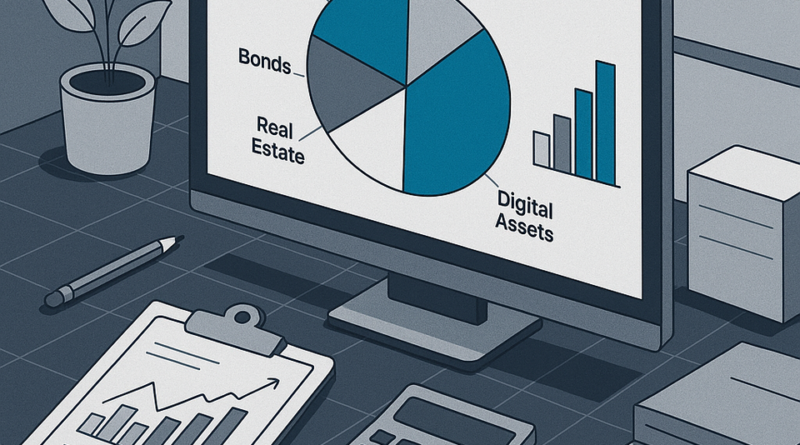
Mix core asset classes: equities (both domestic and international), fixed income (government and corporate bonds), real estate (including REITs), commodities, and digital assets. For example, institutional investors may allocate 50% to stocks, 25% to bonds, 15% to alternative assets, and 10% to digital assets. Retail investors can access diversified ETFs, mutual funds, and fractional investment platforms.
3. Implement Sector and Geographic Allocation
Don’t limit your exposure to one market or sector. Use global equity and bond products, regional ETFs, and sector funds to diversify across industries and countries. For instance, allocate to U.S. technology, European healthcare, Asian infrastructure, and Latin American consumer staples. This broadens the risk and reward profile.
4. Consider Alternative and Thematic Investments
Investment diversification 2025 means supplementing traditional holdings with alternative assets. This might include private equity, venture capital, hedge funds, and commodity plays like gold and renewable energy. Thematic ETFs allow you to invest in trends such as AI or ESG (Environmental, Social, and Governance) principles while maintaining sector diversification.
5. Rebalance Your Portfolio Regularly
Markets move; so should your allocations. Schedule periodic reviews—quarterly or annually—to rebalance your portfolio, trimming winning positions and topping up laggards. Automated platforms now offer tools that maintain your target mix efficiently, limiting emotional decisions.
Examples of Investment Diversification 2025 in Practice
To put these ideas into context, consider a few case studies:
Case 1: The Balanced Growth Portfolio (Individual Investor)
– 35% Global Equities (U.S., Europe, Asia-Pacific)
– 25% Bonds (U.S. Treasuries, emerging market debt, investment-grade corporates)
– 20% Real Estate (REITs in multiple regions)
– 10% Commodities (gold, oil, agricultural ETFs)
– 10% Digital Assets (Bitcoin, Ethereum, tokenized funds)
This portfolio uses investment diversification 2025 across asset classes, geographies, and emerging technologies.
Case 2: The Thematic Investor (Retail)
– 40% in diversified index ETFs
– 15% ESG and sustainable funds
– 20% AI and fintech ETFs
– 15% bonds
– 10% in global REITs
These allocations focus on capturing major structural themes while securing a diversified core.
Case 3: Institutional Endowment
– 25% developed equities
– 15% emerging markets
– 20% alternatives (private equity, hedge funds)
– 20% fixed income
– 10% real assets (infrastructure, natural resources)
– 10% digital/blockchain assets
Institutions leverage advanced investment diversification 2025, incorporating new categories like tokenization and real-world asset integration.
Leveraging Technology: The Role of AI and Fintech
With investment diversification 2025, technology’s role has expanded significantly. Artificial intelligence now powers robo-advisors and digital platforms that analyze global market data, track asset correlations, and automatically rebalance portfolios. These systems respond in real time, making tactical shifts impossible for human managers alone.
Fintech innovations such as tokenization and fractional ownership remove previous barriers to alternative assets. Retail investors can now hold portions of global real estate or even collectible art. Further, digital wallets, open banking, and blockchain security have made managing a diversified portfolio faster and safer than ever. Many new platforms also support round-the-clock trading and offer instant access to global markets, keeping even small investors on par with institutional peers. As pointed out in OECD analysis, this democratization of access is changing investment landscapes rapidly.
Risks and Challenges in Investment Diversification 2025
While diversification offers protection, it’s not foolproof. Correlation across assets may disappear in crises—a phenomenon seen during global selloffs when seemingly unrelated assets drop together. Over-diversifying can also hurt performance, spreading capital so thin that gains are negligible. It’s vital to avoid owning dozens of overlapping funds or similar stocks.
Emerging assets—especially cryptocurrencies and DeFi products—pose other risks. These include regulatory uncertainty, security flaws, and liquidity constraints. Always weigh fees, which can pile up across multiple products and erode returns. Diligent research, updated knowledge, and periodic audits of your holdings are crucial to safeguard your interests. For further risk insights, check Bloomberg’s portfolio guide.
How Regulation Shapes Diversification Strategies
Financial regulations have a pronounced impact on investment diversification 2025. Rising oversight in digital assets and harmonized standards for ESG investments help refine product options and investor rights. Regulatory reform in global pension systems encourages diversification beyond home markets, benefiting growth and safety alike.
In 2025, increased transparency driven by open banking and strengthened international accounting standards facilitates better risk analysis. Still, some regions may tighten controls, impacting access to certain sectors or products. Investors should remain aware of both local and global changes that affect fund choices, access, and reporting duties. This regulatory evolution drives investors to adapt and continually re-examine their diversification plans.
The Importance of Financial Education for Long-Term Diversification
The ongoing transformation in finance highlights why education is a vital pillar in investment diversification 2025. Being well-versed in market dynamics, asset characteristics, and new financial products enables smarter decisions and greater resilience. Continuous learning—through news, courses, and reputable publications—helps investors stay ahead of emerging trends. The effort pays off in portfolios better able to withstand declines, seize new opportunities, and deliver long-term value. Enhance your approach by seeking diverse perspectives and leveraging credible resources on investing and diversification.